Category: Wanza Business

  • From Side Hustle to Scalable Store: 7 Steps to Launching Your First Online Business

    From Side Hustle to Scalable Store: 7 Steps to Launching Your First Online Business

    The dream of turning a passion project or a clever idea into a thriving online business is more accessible than ever before. What often starts as a side hustle, a way to earn a little extra cash, can blossom into a full-fledged, scalable enterprise. But the journey from initial spark to sustainable success requires a clear roadmap.

    If you’re ready to move beyond the occasional sale and build a robust online store, these seven steps will guide you through the process, setting you up for growth and long-term viability.

    1. Validate Your Idea & Identify Your Niche

    Before investing significant time and resources, ensure your product or service has a market.

    • Problem/Solution Fit: What problem does your offering solve? Is there a clear demand for your solution?
    • Target Audience: Who are you trying to reach? Define your ideal customer – their demographics, interests, pain points, and purchasing habits.
    • Competitive Analysis: Who else is in this space? What are they doing well, and where are their gaps? This helps you identify your unique selling proposition (USP).
    • Market Research: Use tools like Google Trends, social media listening, and surveys to gauge interest and identify underserved niches. Starting small and focused can lead to greater success than trying to appeal to everyone.

    2. Craft a Strong Brand Identity

    Your brand is more than just a logo; it’s the essence of your business – its personality, values, and how it makes customers feel.

    • Name & Slogan: Choose a memorable, relevant, and easy-to-pronounce name. A catchy slogan can communicate your value proposition quickly.
    • Visual Identity: Develop a cohesive visual style, including a logo, color palette, and typography. Consistency across all platforms builds recognition and trust.
    • Brand Story: What’s the narrative behind your business? People connect with stories, not just products.
    • Tone of Voice: How will your brand communicate? Is it playful, professional, inspiring, or educational?

    3. Choose Your E-commerce Platform

    The right platform is the backbone of your online store. Consider ease of use, scalability, features, and budget.

    • Shopify: Popular for its user-friendliness, extensive app store, and scalability. Great for beginners and established businesses alike.
    • WooCommerce (WordPress): Offers flexibility and control if you’re comfortable with WordPress, but requires more technical know-how.
    • Etsy: Ideal for handcrafted goods and vintage items, but less control over branding and customer experience.
    • Squarespace/Wix: Good for smaller stores or those prioritizing design simplicity.
    • Features to look for: Payment gateways, inventory management, shipping integrations, SEO capabilities, and customer support.

    4. Develop Your Product/Service Offering

    This is where your idea comes to life.

    • Sourcing/Creation: If you’re selling physical products, decide how you’ll source or create them. Consider dropshipping, manufacturing, or crafting by hand.
    • Pricing Strategy: Research competitor pricing and factor in your costs (materials, labor, shipping, marketing) to determine a profitable and attractive price point.
    • Product Photography & Descriptions: High-quality visuals are crucial for online sales. Write compelling, benefit-driven product descriptions that answer potential customer questions.
    • Inventory Management: Set up systems to track your stock, especially as you scale.

    5. Set Up Your Online Storefront

    Time to build out your digital shop.

    • Website Design: Focus on a clean, intuitive, and mobile-responsive design. Easy navigation and a smooth checkout process are paramount.
    • Essential Pages: Include an “About Us” page, contact information, FAQ, shipping policy, return policy, and privacy policy.
    • Payment & Shipping: Integrate secure payment gateways and set up clear shipping options and costs.
    • Testing: Thoroughly test every aspect of your store – from product browsing to checkout – before launching.

    6. Drive Traffic to Your Store

    A beautiful store is useless without visitors.

    • Search Engine Optimization (SEO): Optimize your product titles, descriptions, and website content with relevant keywords to rank higher in search results.
    • Social Media Marketing: Identify platforms where your target audience hangs out and create engaging content. Consider paid ads for targeted reach.
    • Content Marketing: Start a blog, create videos, or produce other valuable content that attracts and educates your audience.
    • Email Marketing: Build an email list from day one and nurture leads with valuable content, promotions, and updates.
    • Paid Advertising: Explore Google Ads, social media ads (Facebook, Instagram, Pinterest), and influencer marketing.
    • Public Relations: Seek out opportunities for media mentions or collaborations.

    7. Launch, Learn, and Scale

    The launch is just the beginning.

    • Soft Launch: Consider a soft launch to a small audience to iron out any kinks before a broader announcement.
    • Monitor Analytics: Track website traffic, conversion rates, popular products, and customer behavior. Tools like Google Analytics are

  • The 2026 E-commerce Playbook: How AI Agents are Redefining Online Shopping

    The 2026 E-commerce Playbook: How AI Agents are Redefining Online Shopping

    As we move through 2026, the digital storefront is undergoing its most radical transformation since the invention of the smartphone. We have officially entered the era of Agentic Commerce. No longer are AI tools mere “assistants” that suggest products; they have evolved into autonomous agents capable of researching, negotiating, and executing transactions on behalf of both consumers and retailers.

    For businesses, the “Playbook” has changed. Survival in 2026 requires moving beyond traditional SEO and static web design toward an AI-first architecture. Here is how AI agents are rewriting the rules of the game.

    1. From “Search” to “Action”: The Rise of Personal Shopper Agents

    In 2025, shoppers asked AI for advice. In 2026, they delegate the task. Personal AI agents now browse the web to find the best deals, compare technical specifications, and even wait for price drops to hit a pre-set budget before automatically completing a purchase via Agentic Payment Protocols.

    • The Shift: Traffic is moving away from traditional search engines toward “Answer Engines.”
    • The Playbook: Retailers must optimize for AEO (Answer Engine Optimization), ensuring product data is structured so agents can “read” and trust it instantly.

    2. Hyper-Personalization: The End of the Generic Storefront

    The static homepage is dead. Today’s e-commerce sites are dynamic environments that reconfigure themselves in real-time. Using predictive intent, AI agents analyze local weather, recent social trends, and a user’s unique style to create a “Storefront of One.”

    • Impact: Brands using agent-driven personalization have seen conversion rates climb by 15% and revenue increase by nearly 30% compared to traditional models.

    3. Agent-to-Agent (A2A) Negotiation

    One of the most disruptive trends of 2026 is the “negotiation loop.” A consumer’s AI agent can now “talk” to a merchant’s pricing agent to secure a loyalty discount or a bundled deal in milliseconds.

    • The Tech: Universal protocols like MCP (Model Context Protocol) allow different AI systems to interact seamlessly, creating a frictionless marketplace where the best value—not the loudest ad—wins.

    4. Visual and Immersive Discovery

    AI agents have bridged the gap between “seeing” and “buying.” Through AI-enhanced Augmented Reality (AR), virtual stylists don’t just show you an outfit; they simulate how it fits your specific body type and recommend alterations.

    • The Result: Return rates have plummeted as AI agents provide “fit confidence,” solving one of e-commerce’s oldest and costliest problems.

    5. Autonomous Operations: The Back-End Revolution

    Behind the scenes, the “Playbook” focuses on efficiency. Autonomous Merchandisers now manage inventory levels, automatically reordering stock and adjusting dynamic pricing based on real-time global supply chain data—all without human intervention.

    • Efficiency: Multi-agent systems have reduced operational errors by up to 60%, allowing human teams to focus on brand strategy rather than data entry.

    6. The “Human” Guardrail: Trust and Ethics

    As AI agents take over the “logic” of shopping, humans are doubling down on “emotion.” 2026 has seen a surge in Ethical Consumption Advisors—AI agents that vet brands for sustainability, carbon footprint, and fair-trade practices.

    • The Challenge: Brands that lack transparent data or “hallucinate” their credentials are being blacklisted by the very agents consumers trust to protect their values.

    7. The New Loyalty: From Clicks to Context

    Loyalty in 2026 is no longer about points; it’s about contextual relevance. Winning retailers are those whose data is “agent-ready”—clean, structured, and accessible. If an AI agent can’t find your shipping policy or real-time stock levels, your brand essentially doesn’t exist to the modern shopper.


    Would you like me to generate a set of social media captions to help promote this 2026 E-commerce Playbook?

  • Beyond the Website: Why Your Online Presence Needs a ‘Community First’ Strategy

    Beyond the Website: Why Your Online Presence Needs a ‘Community First’ Strategy

    In the early days of the internet, having a website was enough to establish an online presence. Then came social media, making it crucial to be where your audience was. But in 2026, the game has evolved once more. Simply existing on various platforms isn’t enough; true digital success hinges on cultivating a ‘Community First’ strategy.

    This isn’t just about collecting followers or likes; it’s about building genuine connections, fostering a sense of belonging, and creating a loyal ecosystem around your brand or purpose. Your website might be your home base, but your community is your thriving neighborhood.

    The Shifting Sands of Online Engagement

    Traditional marketing often focuses on broadcasting messages to an audience. The “Community First” approach flips this, emphasizing interaction, shared values, and empowering your audience to connect with each other and with you.

    Here’s why this shift is non-negotiable for a robust online presence:

    1. The Decline of Algorithmic Reach (and the Rise of Direct Connection)

    Social media algorithms are notoriously fickle. Organic reach for businesses continues to dwindle, making it harder to consistently connect with your audience without paid promotion. A strong community, however, creates its own gravitational pull. When members feel a sense of ownership and belonging, they actively seek out and engage with your content, bypassing algorithmic gatekeepers. They become your most potent advocates.

    2. Building Unshakeable Loyalty and Trust

    In an age of endless choices and digital noise, trust is the ultimate currency. A community built on shared interests and genuine interaction fosters deep trust. When people feel heard, valued, and connected to others who share their passion, their loyalty transcends mere transactions. They become evangelists, defending your brand and bringing new members into the fold.

    3. Invaluable Feedback and Innovation Hub

    Your community is a living, breathing focus group. They’re on the front lines, using your products, consuming your content, and facing the problems you aim to solve. By actively listening and engaging with your community, you gain unparalleled insights into their needs, desires, and pain points. This direct feedback loop can fuel product development, content creation, and strategic pivots, leading to truly customer-centric innovation.

    4. Amplified Reach and Organic Virality

    When your community is vibrant and engaged, they become your most effective marketing channel. Members are far more likely to share your content, recommend your brand to friends, and discuss your offerings in their own networks. This organic amplification is more credible and far-reaching than any paid advertisement, creating a powerful ripple effect that expands your presence authentically.

    5. Creating a Differentiated Experience

    In competitive markets, simply offering a great product or service isn’t enough. A thriving community offers a unique value proposition that competitors struggle to replicate. It provides an exclusive space for members to connect, learn, and grow together, making your brand an indispensable part of their lives. This differentiates you beyond features and price.

    How to Implement a ‘Community First’ Strategy

    Shifting to a community-first approach requires intentional effort. Here are key steps:

    • Choose the Right Platforms: Don’t just go where everyone else is. Go where your ideal community members naturally congregate. This could be a dedicated forum, a Discord server, a private Facebook/LinkedIn group, a subreddit, or even a highly active comment section on your blog or YouTube channel.
    • Define Your Community’s Purpose: What brings your members together? Is it a shared hobby, a professional interest, a specific problem they’re solving, or a common value? Clearly articulate this purpose to attract the right people.
    • Actively Engage and Facilitate: Don’t just create a space and walk away. Be present, ask questions, respond to comments, celebrate member achievements, and facilitate introductions. Your role is often that of a host and facilitator.
    • Empower Your Members: Give your community opportunities to lead, share, and contribute. User-generated content, member spotlights, and opportunities for peer-to-peer support are powerful tools.
    • Provide Exclusive Value: Offer your community something special – early access to products, exclusive content, Q&A sessions, special discounts, or private events. Make them feel like VIPs.
    • Establish Clear Guidelines: To ensure a positive and respectful environment, set clear community rules and moderate consistently.
    • Integrate with Your Website: While the community might live elsewhere, ensure your website seamlessly links to and promotes your community spaces. Your website is still your anchor; your community is your expansive territory.

    In 2026, your online presence isn’t just about what you say on your website or social media profiles. It’s about the conversations you spark, the relationships you nurture, and the collective spirit you cultivate. By putting your community first, you’re not just building an audience; you’re building a movement.

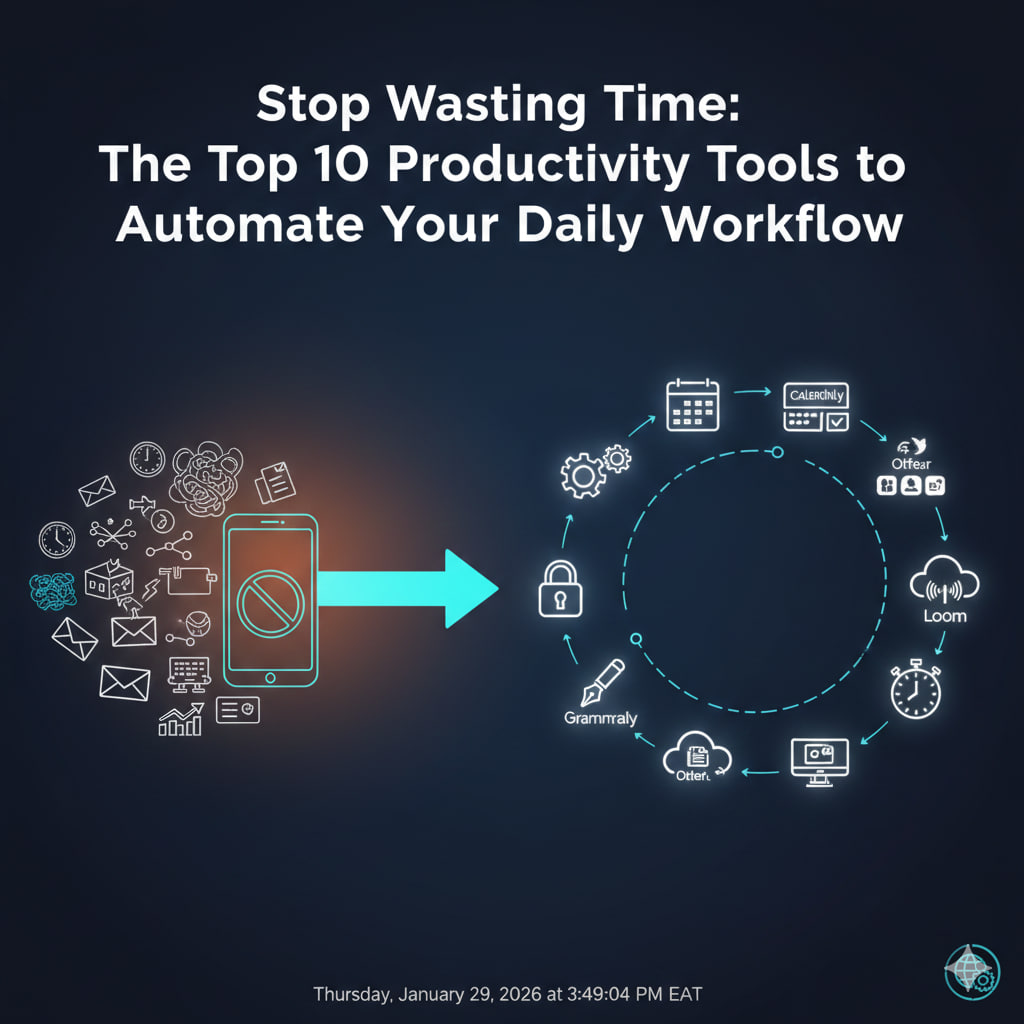
  • Stop Wasting Time: The Top 10 Productivity Tools to Automate Your Daily Workflow

    Stop Wasting Time: The Top 10 Productivity Tools to Automate Your Daily Workflow

    In today’s fast-paced world, time is a non-renewable resource, and for solopreneurs, small business owners, and busy professionals, every minute counts. The good news is that you no longer need to spend countless hours on repetitive tasks. The rise of sophisticated automation tools means you can reclaim your day, boost efficiency, and focus on what truly matters: growth, creativity, and strategic thinking.

    This isn’t about working harder; it’s about working smarter. By leveraging the right technology, you can automate mundane tasks, streamline communication, and turn chaotic workflows into smooth, productive systems.

    Here are the top 10 productivity tools to supercharge your daily routine and stop wasting time:

    1. Zapier (or Make.com) – The Ultimate Integrator

    What it does: Connects virtually all your apps and automates workflows between them. Think of it as the digital glue for your entire tech stack. How it saves time: Automatically move data between your CRM, email marketing, project management, and accounting software. For instance, a new lead in your CRM can automatically trigger an email sequence, create a task in your project manager, and add a row to a Google Sheet. Why it’s a must-have: Eliminates manual data entry and ensures seamless information flow across your business.

    2. Calendly (or Acuity Scheduling) – Intelligent Scheduling

    What it does: Automates the process of booking meetings, calls, and appointments. How it saves time: No more back-and-forth emails trying to find a suitable time. Simply share your Calendly link, and clients or colleagues can see your real-time availability and book a slot directly into your calendar. Why it’s a must-have: Streamlines appointment setting, reduces no-shows with automated reminders, and frees up significant administrative time.

    3. Asana (or Trello/ClickUp) – Project & Task Management

    What it does: Organizes projects, tracks tasks, sets deadlines, and facilitates team collaboration (even if your “team” is just you and a virtual assistant). How it saves time: Provides a clear overview of all your responsibilities, preventing forgotten tasks and missed deadlines. Automate recurring tasks and create templates for common projects. Why it’s a must-have: Keeps your work structured, ensures accountability, and makes complex projects manageable.

    4. LastPass (or 1Password) – Password Management

    What it does: Securely stores all your passwords and other sensitive information, generating strong, unique passwords for every account. How it saves time: Eliminates the need to remember or reset countless passwords. Auto-fills login details, speeding up access to all your online tools. Why it’s a must-have: Essential for cybersecurity and saves immense time and frustration from forgotten credentials.

    5. Grammarly (or ProWritingAid) – Writing Assistant

    What it does: Checks your writing for grammar, spelling, punctuation, clarity, engagement, and delivery. How it saves time: Catches errors before you hit send or publish, saving time on proofreading and preventing embarrassing mistakes. It also offers suggestions for conciseness and style. Why it’s a must-have: Ensures professional and effective communication across all written content, from emails to blog posts.

    6. Buffer (or Hootsuite) – Social Media Management

    What it does: Schedules and publishes your social media content across multiple platforms from a single dashboard. How it saves time: Plan your social media content in advance, automate posting at optimal times, and analyze performance without manually logging into each platform. Why it’s a must-have: Maintains a consistent social media presence without constantly interrupting your workflow.

    7. Otter.ai (or Descript) – AI Transcription & Meeting Summarizer

    What it does: Records and transcribes meetings, interviews, and dictations in real-time, often providing AI-generated summaries and action items. How it saves time: Eliminates the need for meticulous note-taking during calls. Allows you to focus on the conversation, knowing a detailed transcript and summary will be available afterward. Why it’s a must-have: Great for content creation, documenting client interactions, and ensuring you never miss a key detail from a conversation.

    8. Loom (or Vidyard) – Video Messaging & Screen Recording

    What it does: Quickly records your screen, webcam, or both, allowing you to create short video messages and tutorials. How it saves time: Replaces lengthy email explanations or multiple back-and-forth messages. Visually explain complex ideas, provide feedback, or onboard new clients more effectively and efficiently. Why it’s a must-have: Improves communication clarity and speed, especially for technical instructions or personalized messages.

    9. Google Workspace (or Microsoft 365) – Collaborative Cloud Suite

    What it does: Offers integrated tools like email (Gmail/Outlook), document creation (Docs/Word), spreadsheets (Sheets/Excel), presentations (Slides/PowerPoint), and cloud storage (Drive/OneDrive). How it saves time: Provides a centralized, collaborative environment for all your essential documents and communications. Automatic saving, real-time collaboration, and easy sharing are standard. Why it’s a must-have: The foundational suite for modern business operations, ensuring accessibility and seamless teamwork.

    10. RescueTime (or Toggl Track) – Time Tracking & Analysis

    What it does: Automatically tracks your time spent on applications and websites, providing detailed reports on your productivity. How it saves time: Identifies where your time is actually going, helping you pinpoint distractions and areas for improvement. You can then use this data to make informed decisions about your workflow and schedule. Why it’s a must-have: Creates awareness of your time usage, enabling you to optimize your focus and allocate time more effectively.


    By integrating even a few of these tools into your daily workflow, you’ll be amazed at how much time you can reclaim. Stop letting repetitive tasks dictate your day, and start leveraging automation to build a more productive, efficient, and enjoyable work life.

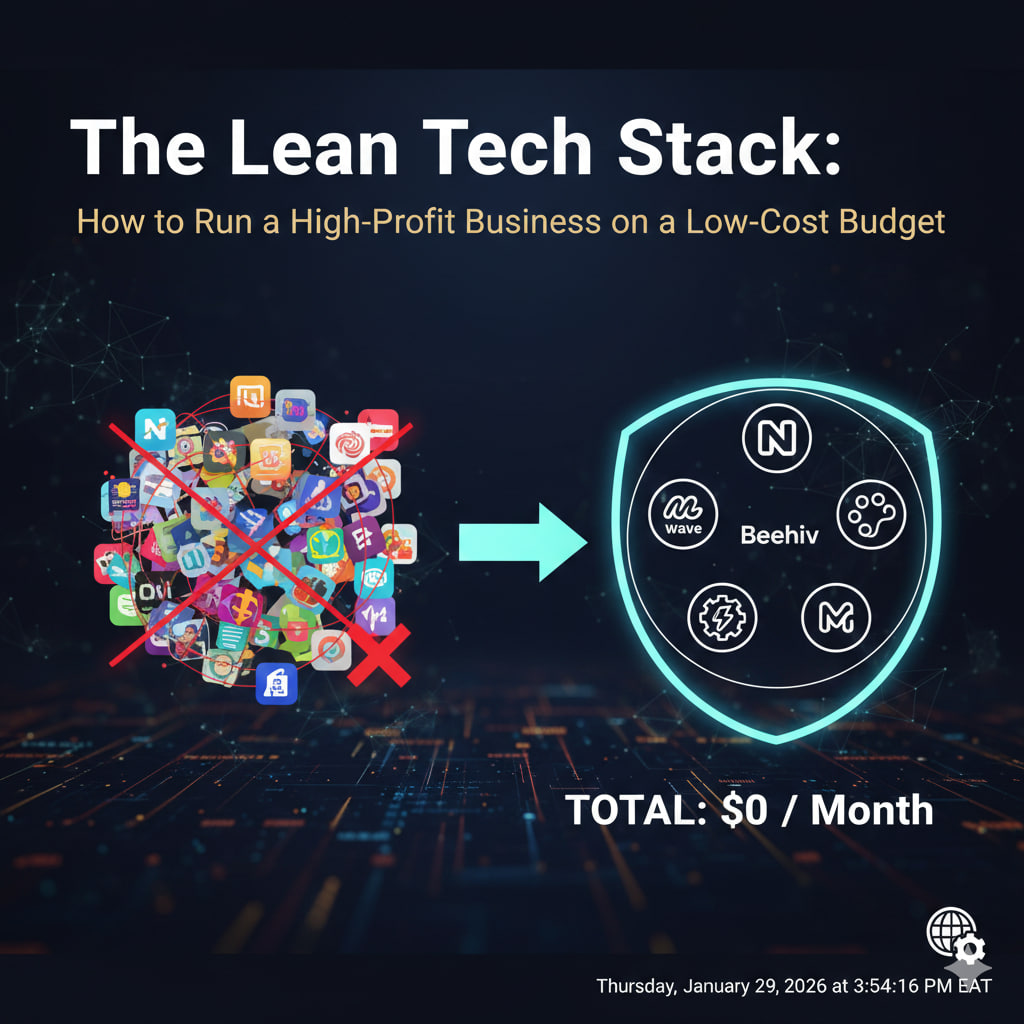
  • The Lean Tech Stack: How to Run a High-Profit Business on a Low-Cost Budget

    The Lean Tech Stack: How to Run a High-Profit Business on a Low-Cost Budget

    The traditional approach to business software was to buy a specialized tool for every problem. By the end of the year, you’d be staring at $1,000+ in monthly recurring costs. The “Lean” approach of 2026 focuses on consolidation, automation, and open-source alternatives.

    1. The Core: The “All-in-One” Workspace

    Instead of paying for separate project management, document storage, and wiki tools, lean businesses are moving toward unified platforms.

    • The Lean Choice: Notion or Anytype (Open Source).
    • The Strategy: Use one tool to house your CRM, task lists, and internal documentation. By centralizing your data, you reduce the time spent switching between tabs—a phenomenon known as “context switching” that can cost up to 40% of your productive time.

    2. Communication: Moving Away from Paid Seats

    Large-scale communication tools often charge per user, which becomes a “growth tax.”

    • The Lean Choice: Discord or Telegram.
    • The Strategy: While Slack is the corporate standard, Discord offers nearly identical functionality (channels, voice, screen sharing) for free. For solopreneurs, Telegram groups or “Channels” provide a high-speed, no-cost way to manage a community or small team.

    3. Marketing & Outreach: The Power of “Freemium”

    In 2026, AI has commoditized content creation. You no longer need a $100/month copywriter tool or a high-end design suite.

    • The Lean Choice: Canva (Free Tier) and Claude/Gemini (Free Tier).
    • The Strategy: Use the free versions of LLMs to draft emails and social posts. Design your assets in Canva. To keep your email list costs low, start with MailerLite or Beehiiv, which offer generous free tiers for your first 1,000–2,500 subscribers.

    4. Financial Operations: Zero-Fee Banking and Invoicing

    Don’t let bank fees and invoice processing eat 3-5% of your revenue.

    • The Lean Choice: Mercury or Wise Business, combined with Wave Accounting.
    • The Strategy: Use “Neobanks” that offer zero monthly fees and competitive exchange rates. Wave provides professional invoicing and accounting software for free, charging only for payment processing—allowing you to keep your fixed costs at zero.

    5. Automation: The “Invisible Employee”

    The goal of a lean stack is to replace human hours with automated workflows.

    • The Lean Choice: Make.com (formerly Integromat).
    • The Strategy: While Zapier is popular, Make.com is often significantly cheaper and more powerful for complex workflows. One “Scenario” can handle the work of a part-time admin—automatically moving an invoice from your email to your accounting software and then notifying you on Discord.

    The Lean Audit: The 3-Month Rule

    To maintain a high-profit margin, perform a “Lean Audit” every quarter.

    1. Check Usage: If you haven’t logged into a paid tool in 30 days, cancel it.
    2. Consolidate: Can this new feature in Notion replace my separate “To-Do” app? If yes, delete the app.
    3. Negotiate or Annualize: If you must use a paid tool, switch to an annual plan to save 20-30%, or look for “Startup” discounts.

    Summary: The $0 to $50 Starter Stack

    FunctionToolCost
    WorkspaceNotion$0 (Personal)
    FinanceWave / Mercury$0
    Design/AICanva / Gemini$0
    EmailBeehiiv$0 (Up to 2.5k subs)
    AutomationMake.com$0 (Free Tier)
    TOTAL$0 / Month
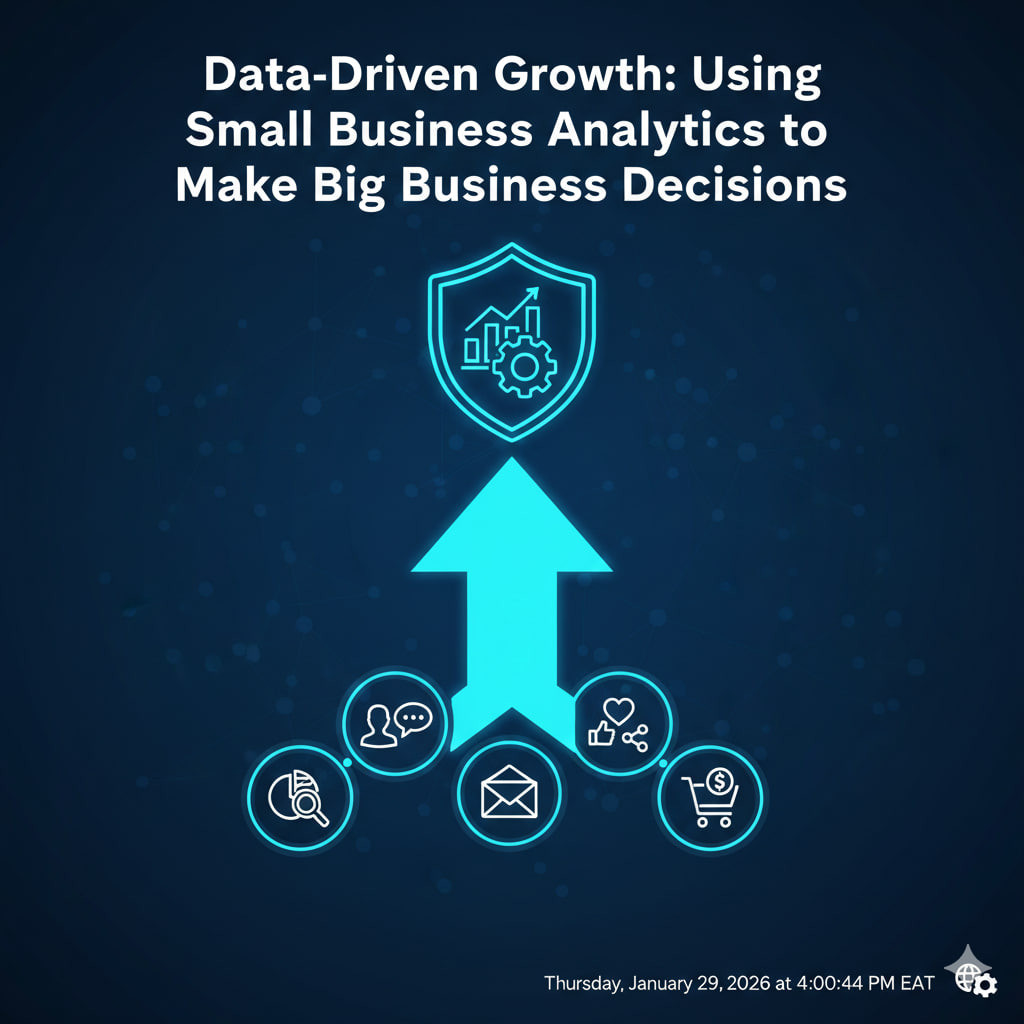
  • Data-Driven Growth: Using Small Business Analytics to Make Big Business Decisions

    Data-Driven Growth: Using Small Business Analytics to Make Big Business Decisions

    In 2026, the idea that “data is only for big corporations” is a relic of the past. Small businesses, solopreneurs, and startups now have access to powerful, user-friendly analytics tools that can transform gut feelings into actionable insights. This isn’t about drowning in spreadsheets; it’s about harnessing specific data points to make smart, strategic decisions that drive significant growth—the kind of decisions that typically propel “big businesses.”

    The truth is, even with limited resources, a data-driven approach can be your most significant competitive advantage, allowing you to optimize everything from marketing spend to customer retention.

    Why Data is No Longer Optional for Small Businesses

    1. Precision Targeting: In a crowded market, generic marketing campaigns waste precious resources. Data allows you to understand exactly who your ideal customer is and where to find them.
    2. Optimized Spending: Every dollar counts. Analytics help you identify what’s working (and what’s not) in your advertising, content, and sales efforts, ensuring a higher ROI.
    3. Proactive Problem Solving: Spot trends and potential issues before they escalate. Declining website traffic, rising customer churn, or a dip in conversion rates can be identified early.
    4. Personalized Customer Experiences: Understanding individual customer behavior allows you to tailor recommendations, communications, and offers, leading to increased loyalty and lifetime value.
    5. Strategic Foresight: Data isn’t just about looking backward. Predictive analytics, even at a basic level, can help you anticipate future demand, market shifts, and emerging opportunities.

    The Lean Analytics Stack: Essential Tools for Every Small Business

    You don’t need expensive enterprise software. A few core tools can provide immense value:

    1. Google Analytics 4 (GA4):
      • What it tracks: Website traffic, user behavior (where they come from, what they click, how long they stay, conversion events).
      • Why it’s critical: Your website is your digital storefront. GA4 reveals how customers interact with it, identifying popular content, conversion funnels, and areas of friction. It’s free and invaluable.
    2. CRM (Customer Relationship Management) Software (e.g., HubSpot CRM Free, Zoho CRM):
      • What it tracks: Customer interactions, sales pipeline, lead status, purchase history, communication logs.
      • Why it’s critical: Your customers are your lifeline. A CRM helps you understand your sales cycle, identify your most valuable customers, and personalize your outreach efforts.
    3. Social Media Analytics (Built-in to platforms like Facebook, Instagram, LinkedIn):
      • What it tracks: Post reach, engagement rates, follower demographics, best performing content types.
      • Why it’s critical: If social media is part of your marketing, these insights show you what content resonates with your audience and when they are most active.
    4. Email Marketing Analytics (e.g., MailerLite, Beehiiv, ConvertKit):
      • What it tracks: Open rates, click-through rates, conversion rates from emails, unsubscribe rates.
      • Why it’s critical: Your email list is a direct line to your audience. These metrics tell you how effective your communication is and help you refine your messaging.
    5. Payment Processing & E-commerce Platform Analytics (e.g., Shopify Analytics, Stripe Reports, Square Dashboard):
      • What it tracks: Sales volume, average order value, popular products, revenue trends, customer acquisition costs, churn rates.
      • Why it’s critical: Directly impacts your bottom line. These reports are essential for understanding product performance, pricing strategies, and overall financial health.

    Making Big Decisions from Small Data: Actionable Examples

    • Decision:Should I invest more in Facebook Ads or Google Search Ads?
      • Data Insight: Compare conversion rates and customer acquisition costs (CAC) from GA4 for each channel. If Facebook Ads have a higher CAC and lower conversion, shift budget to Google Search.
    • Decision:How can I reduce customer churn?
      • Data Insight: Use your CRM to identify common characteristics of churned customers (e.g., didn’t use a specific feature, received less personalized follow-up). Address those gaps with targeted outreach or product improvements.
    • Decision:What new product or service should I offer?
      • Data Insight: Analyze popular product views in GA4 vs. actual purchases. If a product is viewed often but rarely bought, there might be a pricing or information gap. Use social media analytics to spot trending conversations or pain points your audience expresses.
    • Decision:When is the best time to send my newsletter?
      • Data Insight: Email marketing analytics show the highest open and click-through rates based on send time. Optimize your schedule accordingly.

    Don’t let the term “analytics” intimidate you. Start with what’s readily available in your existing tools. By consistently monitoring key metrics and letting data guide your decisions, your small business can make big strategic moves,ensuring sustainable growth and long-term success in the competitive landscape of 2026.