Author: admin2

  • Stop Wasting Time: The Top 10 Productivity Tools to Automate Your Daily Workflow

    Stop Wasting Time: The Top 10 Productivity Tools to Automate Your Daily Workflow

    In today’s fast-paced world, time is a non-renewable resource, and for solopreneurs, small business owners, and busy professionals, every minute counts. The good news is that you no longer need to spend countless hours on repetitive tasks. The rise of sophisticated automation tools means you can reclaim your day, boost efficiency, and focus on what truly matters: growth, creativity, and strategic thinking.

    This isn’t about working harder; it’s about working smarter. By leveraging the right technology, you can automate mundane tasks, streamline communication, and turn chaotic workflows into smooth, productive systems.

    Here are the top 10 productivity tools to supercharge your daily routine and stop wasting time:

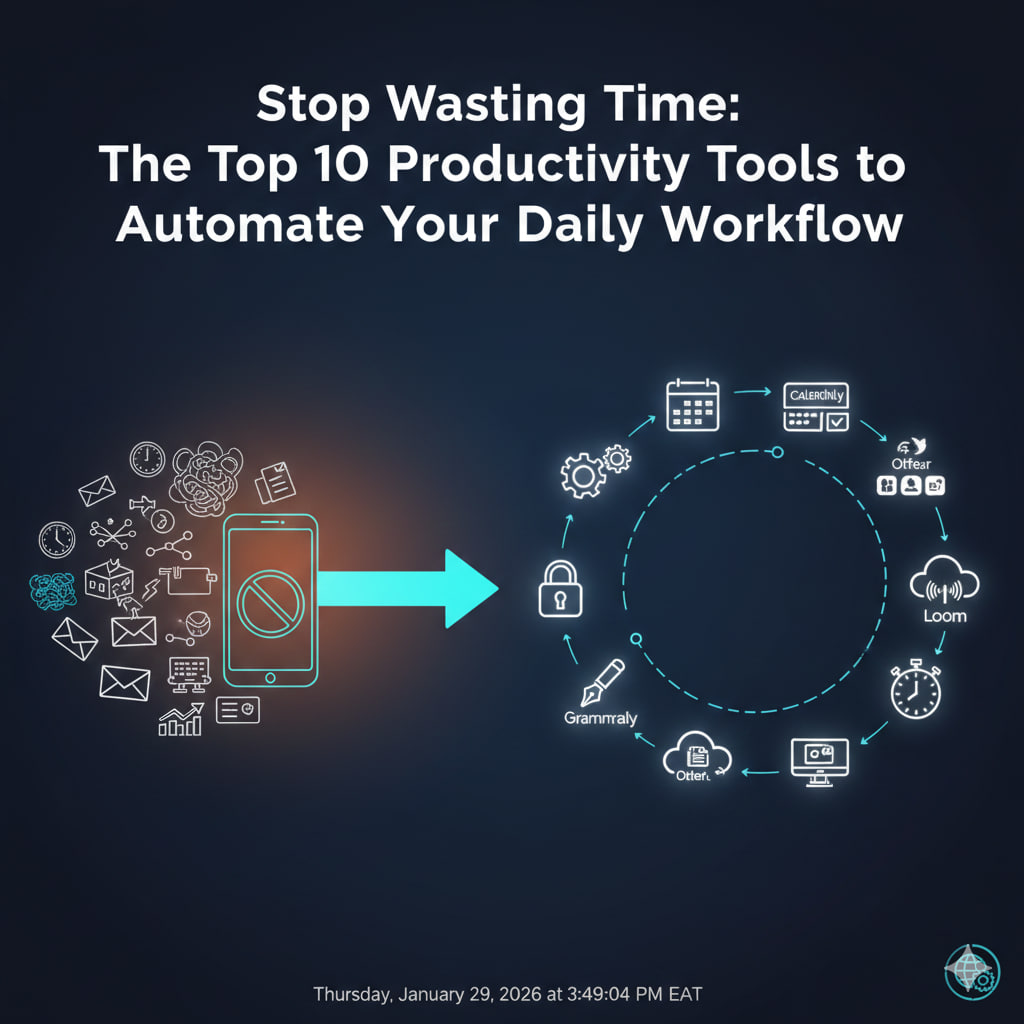
    1. Zapier (or Make.com) – The Ultimate Integrator

    What it does: Connects virtually all your apps and automates workflows between them. Think of it as the digital glue for your entire tech stack. How it saves time: Automatically move data between your CRM, email marketing, project management, and accounting software. For instance, a new lead in your CRM can automatically trigger an email sequence, create a task in your project manager, and add a row to a Google Sheet. Why it’s a must-have: Eliminates manual data entry and ensures seamless information flow across your business.

    2. Calendly (or Acuity Scheduling) – Intelligent Scheduling

    What it does: Automates the process of booking meetings, calls, and appointments. How it saves time: No more back-and-forth emails trying to find a suitable time. Simply share your Calendly link, and clients or colleagues can see your real-time availability and book a slot directly into your calendar. Why it’s a must-have: Streamlines appointment setting, reduces no-shows with automated reminders, and frees up significant administrative time.

    3. Asana (or Trello/ClickUp) – Project & Task Management

    What it does: Organizes projects, tracks tasks, sets deadlines, and facilitates team collaboration (even if your “team” is just you and a virtual assistant). How it saves time: Provides a clear overview of all your responsibilities, preventing forgotten tasks and missed deadlines. Automate recurring tasks and create templates for common projects. Why it’s a must-have: Keeps your work structured, ensures accountability, and makes complex projects manageable.

    4. LastPass (or 1Password) – Password Management

    What it does: Securely stores all your passwords and other sensitive information, generating strong, unique passwords for every account. How it saves time: Eliminates the need to remember or reset countless passwords. Auto-fills login details, speeding up access to all your online tools. Why it’s a must-have: Essential for cybersecurity and saves immense time and frustration from forgotten credentials.

    5. Grammarly (or ProWritingAid) – Writing Assistant

    What it does: Checks your writing for grammar, spelling, punctuation, clarity, engagement, and delivery. How it saves time: Catches errors before you hit send or publish, saving time on proofreading and preventing embarrassing mistakes. It also offers suggestions for conciseness and style. Why it’s a must-have: Ensures professional and effective communication across all written content, from emails to blog posts.

    6. Buffer (or Hootsuite) – Social Media Management

    What it does: Schedules and publishes your social media content across multiple platforms from a single dashboard. How it saves time: Plan your social media content in advance, automate posting at optimal times, and analyze performance without manually logging into each platform. Why it’s a must-have: Maintains a consistent social media presence without constantly interrupting your workflow.

    7. Otter.ai (or Descript) – AI Transcription & Meeting Summarizer

    What it does: Records and transcribes meetings, interviews, and dictations in real-time, often providing AI-generated summaries and action items. How it saves time: Eliminates the need for meticulous note-taking during calls. Allows you to focus on the conversation, knowing a detailed transcript and summary will be available afterward. Why it’s a must-have: Great for content creation, documenting client interactions, and ensuring you never miss a key detail from a conversation.

    8. Loom (or Vidyard) – Video Messaging & Screen Recording

    What it does: Quickly records your screen, webcam, or both, allowing you to create short video messages and tutorials. How it saves time: Replaces lengthy email explanations or multiple back-and-forth messages. Visually explain complex ideas, provide feedback, or onboard new clients more effectively and efficiently. Why it’s a must-have: Improves communication clarity and speed, especially for technical instructions or personalized messages.

    9. Google Workspace (or Microsoft 365) – Collaborative Cloud Suite

    What it does: Offers integrated tools like email (Gmail/Outlook), document creation (Docs/Word), spreadsheets (Sheets/Excel), presentations (Slides/PowerPoint), and cloud storage (Drive/OneDrive). How it saves time: Provides a centralized, collaborative environment for all your essential documents and communications. Automatic saving, real-time collaboration, and easy sharing are standard. Why it’s a must-have: The foundational suite for modern business operations, ensuring accessibility and seamless teamwork.

    10. RescueTime (or Toggl Track) – Time Tracking & Analysis

    What it does: Automatically tracks your time spent on applications and websites, providing detailed reports on your productivity. How it saves time: Identifies where your time is actually going, helping you pinpoint distractions and areas for improvement. You can then use this data to make informed decisions about your workflow and schedule. Why it’s a must-have: Creates awareness of your time usage, enabling you to optimize your focus and allocate time more effectively.


    By integrating even a few of these tools into your daily workflow, you’ll be amazed at how much time you can reclaim. Stop letting repetitive tasks dictate your day, and start leveraging automation to build a more productive, efficient, and enjoyable work life.
  • The ‘No-Code’ Revolution: How to Build Custom Business Apps Without Writing a Line of Code

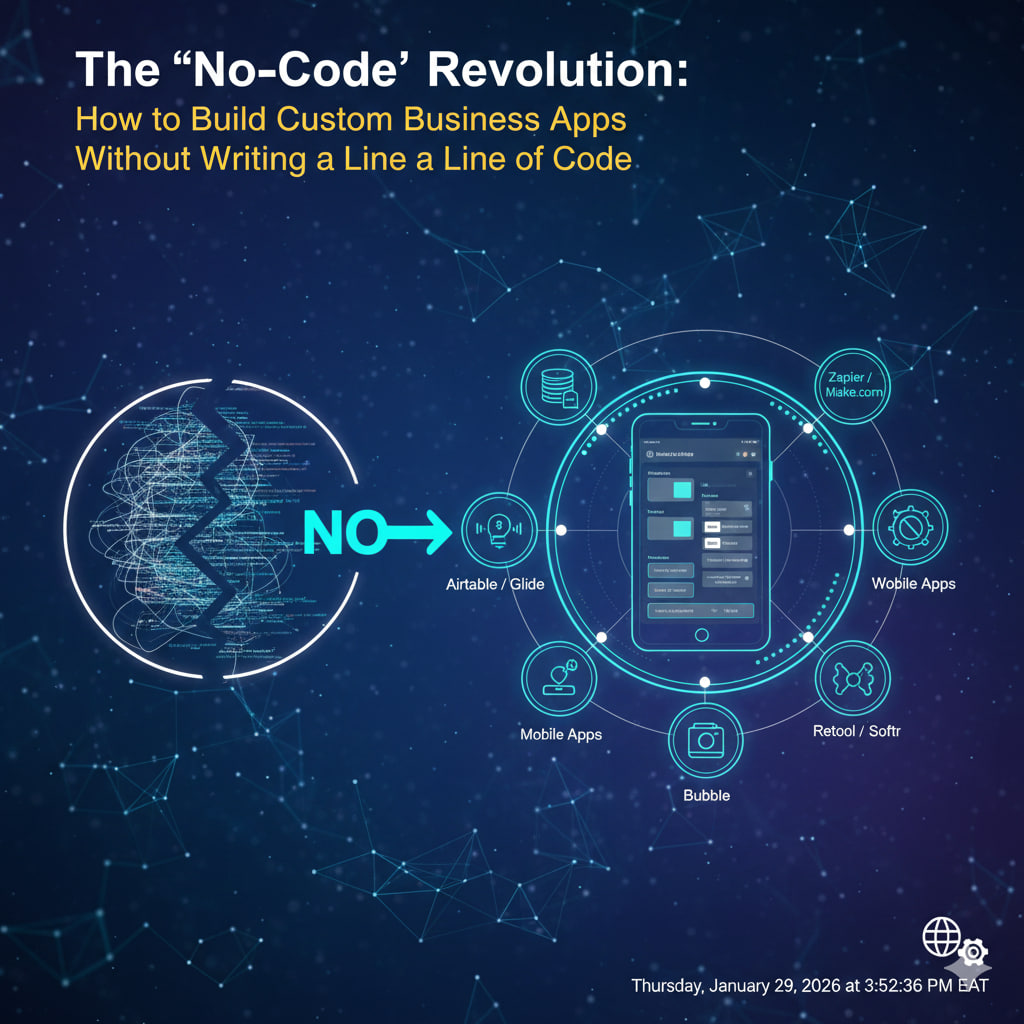
    The ‘No-Code’ Revolution: How to Build Custom Business Apps Without Writing a Line of Code

    For decades, custom software was a luxury reserved for the biggest players. If you needed a bespoke CRM or a unique inventory tracker, you had two choices: hire an expensive development team or settle for “off-the-shelf” software that didn’t quite fit.

    By 2026, that dynamic has flipped. Experts project that 75% of new business applications are now built using no-code or low-code platforms. The “No-Code Revolution” isn’t just a trend; it’s the new standard for operational agility.

    What is No-Code, Really?

    No-code platforms are visual development environments. Instead of typing lines of syntax, you use drag-and-drop interfaces, pre-built logic blocks, and AI-guided assembly. If you can build a slide deck or organize a spreadsheet, you can now build an app.

    Why the Shift is Happening Now

    1. The Developer Shortage: Demand for apps is growing five times faster than IT departments can handle. No-code fills this “skills gap.”
    2. AI Orchestration: Modern platforms now feature “AI Agents.” You can describe your app in plain English (“Build me a client portal with a secure login and a progress dashboard”), and the platform generates the architecture for you.
    3. Cost & Speed: Building a custom app traditionally cost upwards of $50,000 and took months. Today, you can launch a functional MVP (Minimum Viable Product) in under 30 days for a fraction of the price.

    The 2026 No-Code Starter Pack: Choosing Your Tool

    Not all no-code tools are created equal. Your choice depends on what you’re building:

    GoalBest PlatformKey Strength
    Complex Web AppsBubbleDeep logic and “all-in-one” power.
    Internal Business ToolsRetool / SoftrConnects directly to your existing data.
    Native Mobile AppsFlutterFlow / AdaloBeautiful UIs that launch on the App Store.
    Workflow AutomationZapier / Make.comThe “glue” that connects 6,000+ different apps.
    Database-First AppsAirtable / GlideTurns a simple spreadsheet into a powerful app.

    5 Steps to Building Your First App

    1. Define the “Single Source of Truth”: Identify your data. Where does it live? (Google Sheets, Airtable, or a SQL database).
    2. Map the User Journey: Sketch out the screens. What is the first thing a user sees? What button do they click to submit information?
    3. Use a Template: Don’t start from a blank canvas. Most platforms offer “Industry Kits” for HR, Sales, or Logistics that you can customize.
    4. Configure the Logic: Set up your “If/Then” rules. (e.g., If a user submits an expense report over $500, then send an alert to the manager).
    5. Test and Iterate: The beauty of no-code is that you can change a feature in seconds. Launch a basic version to a small group, get feedback, and “live-update” the app.

    The “Shadow IT” Warning

    While no-code is empowering, it comes with a responsibility: Security. As a solopreneur or manager, ensure your chosen platform offers Enterprise-grade encryption and Role-Based Access Control (RBAC). Just because you didn’t write the code doesn’t mean the data shouldn’t be locked down.

  • The Lean Tech Stack: How to Run a High-Profit Business on a Low-Cost Budget

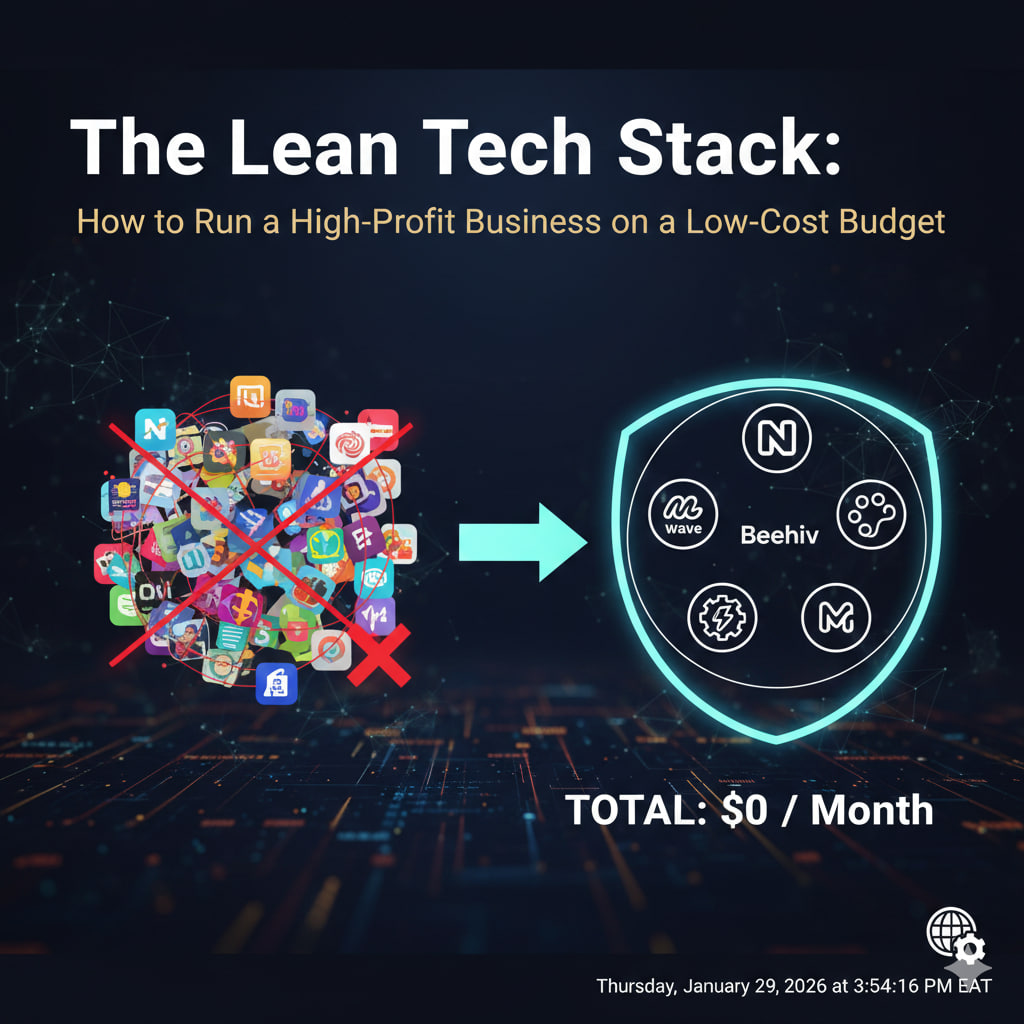
    The Lean Tech Stack: How to Run a High-Profit Business on a Low-Cost Budget

    The traditional approach to business software was to buy a specialized tool for every problem. By the end of the year, you’d be staring at $1,000+ in monthly recurring costs. The “Lean” approach of 2026 focuses on consolidation, automation, and open-source alternatives.

    1. The Core: The “All-in-One” Workspace

    Instead of paying for separate project management, document storage, and wiki tools, lean businesses are moving toward unified platforms.

    • The Lean Choice: Notion or Anytype (Open Source).
    • The Strategy: Use one tool to house your CRM, task lists, and internal documentation. By centralizing your data, you reduce the time spent switching between tabs—a phenomenon known as “context switching” that can cost up to 40% of your productive time.

    2. Communication: Moving Away from Paid Seats

    Large-scale communication tools often charge per user, which becomes a “growth tax.”

    • The Lean Choice: Discord or Telegram.
    • The Strategy: While Slack is the corporate standard, Discord offers nearly identical functionality (channels, voice, screen sharing) for free. For solopreneurs, Telegram groups or “Channels” provide a high-speed, no-cost way to manage a community or small team.

    3. Marketing & Outreach: The Power of “Freemium”

    In 2026, AI has commoditized content creation. You no longer need a $100/month copywriter tool or a high-end design suite.

    • The Lean Choice: Canva (Free Tier) and Claude/Gemini (Free Tier).
    • The Strategy: Use the free versions of LLMs to draft emails and social posts. Design your assets in Canva. To keep your email list costs low, start with MailerLite or Beehiiv, which offer generous free tiers for your first 1,000–2,500 subscribers.

    4. Financial Operations: Zero-Fee Banking and Invoicing

    Don’t let bank fees and invoice processing eat 3-5% of your revenue.

    • The Lean Choice: Mercury or Wise Business, combined with Wave Accounting.
    • The Strategy: Use “Neobanks” that offer zero monthly fees and competitive exchange rates. Wave provides professional invoicing and accounting software for free, charging only for payment processing—allowing you to keep your fixed costs at zero.

    5. Automation: The “Invisible Employee”

    The goal of a lean stack is to replace human hours with automated workflows.

    • The Lean Choice: Make.com (formerly Integromat).
    • The Strategy: While Zapier is popular, Make.com is often significantly cheaper and more powerful for complex workflows. One “Scenario” can handle the work of a part-time admin—automatically moving an invoice from your email to your accounting software and then notifying you on Discord.

    The Lean Audit: The 3-Month Rule

    To maintain a high-profit margin, perform a “Lean Audit” every quarter.

    1. Check Usage: If you haven’t logged into a paid tool in 30 days, cancel it.
    2. Consolidate: Can this new feature in Notion replace my separate “To-Do” app? If yes, delete the app.
    3. Negotiate or Annualize: If you must use a paid tool, switch to an annual plan to save 20-30%, or look for “Startup” discounts.

    Summary: The $0 to $50 Starter Stack

    FunctionToolCost
    WorkspaceNotion$0 (Personal)
    FinanceWave / Mercury$0
    Design/AICanva / Gemini$0
    EmailBeehiiv$0 (Up to 2.5k subs)
    AutomationMake.com$0 (Free Tier)
    TOTAL$0 / Month
  • Remote, Not Resigned: Managing a Distributed Team Using Modern Collaboration Tech

    Remote, Not Resigned: Managing a Distributed Team Using Modern Collaboration Tech

    Here’s an article and thumbnail for “Remote, Not Resigned: Managing a Distributed Team Using Modern Collaboration Tech”:


    Remote, Not Resigned: Managing a Distributed Team Using Modern Collaboration Tech

    The great remote work experiment of the early 2020s has evolved into a permanent, strategic advantage for businesses in 2026. Companies that once struggled with distributed teams have now perfected the art of virtual collaboration, leveraging cutting-edge technology to maintain high productivity, foster strong company culture, and drive innovation, regardless of physical location.

    The key lies in understanding that “remote” doesn’t mean “resigned” to isolation or inefficiency. Instead, it means empowering teams with the right tools and strategies to thrive autonomously while remaining deeply connected to shared goals.

    The Evolution of Remote Work: Beyond Basic Video Calls

    In 2026, managing a distributed team goes far beyond simple video conferencing. It involves a holistic approach to digital infrastructure, communication protocols, and a culture of trust and transparency.

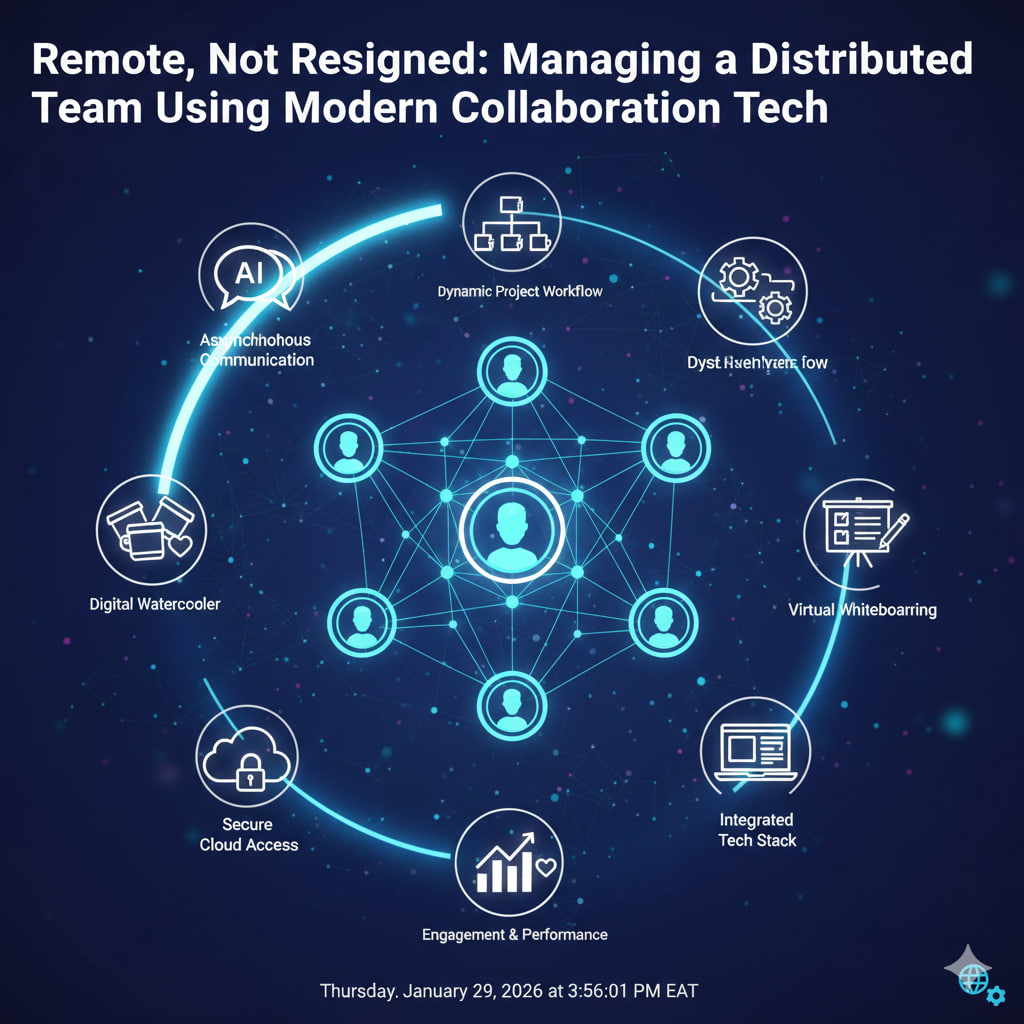
    1. The Asynchronous-First Communication Hub

    Synchronous meetings (like video calls) are still necessary, but the default communication mode for high-performing remote teams is asynchronous.

    • Modern Tech: Slack Huddles 2.0 (with AI summaries), Microsoft Teams Channels with AI context, Notion (for documentation and comments), and Loom (for quick video messages).
    • Why it works: These tools allow team members across different time zones to contribute when it’s convenient for them, reducing “Zoom fatigue” and ensuring well-thought-out responses. AI-powered summaries help catch up quickly.

    2. Dynamic Project & Workflow Orchestration

    Traditional project management tools have evolved into dynamic workflow orchestrators that adapt to distributed teams’ needs.

    • Modern Tech: ClickUp (for custom workflows), Asana (for task automation), and Monday.com (for visual project tracking).
    • Why it works: These platforms offer robust automation (e.g., if a task is completed, then notify the next person in the workflow), personalized dashboards for each team member, and integrated communication features, ensuring everyone knows what needs to be done and by whom.

    3. Virtual Whiteboarding & Brainstorming Environments

    Recreating the spontaneity of an in-person brainstorming session is crucial for innovation.

    • Modern Tech: Miro and Mural.
    • Why it works: These tools provide infinite canvases where teams can collaboratively brainstorm with sticky notes, diagrams, images, and live cursors. They often integrate with video conferencing, allowing for dynamic, interactive remote workshops. AI features now assist in organizing ideas and identifying patterns.

    4. The Digital Watercooler: Fostering Connection & Culture

    Isolation is a significant risk for remote teams. Modern tech is dedicated to replicating informal interactions.

    • Modern Tech: Donut (Slack/Teams integration) for random coffee chats, Gather.town for virtual office spaces, and private social channels within your communication hub.
    • Why it works: These tools encourage spontaneous, non-work-related interactions, helping to build rapport, strengthen bonds, and combat feelings of loneliness that can arise in remote settings.

    5. Performance Monitoring & Employee Engagement Platforms

    Managing remote performance isn’t about micromanagement; it’s about transparency and support.

    • Modern Tech: Glint (for real-time sentiment analysis), Culture Amp (for continuous feedback), and custom dashboards built in Notion or ClickUp for goal tracking.
    • Why it works: These platforms provide insights into employee well-being, workload, and engagement levels, allowing managers to proactively address issues, recognize achievements, and ensure team members feel valued and supported.

    6. Secure & Seamless Access: The Cloud-Native Infrastructure

    The foundation of a successful distributed team is secure, reliable access to all necessary resources, regardless of location or device.

    • Modern Tech: Google Workspace or Microsoft 365 (for cloud documents and email), LastPass Business (for shared password management), and Zero-Trust Network Access (ZTNA) solutions.
    • Why it works: Ensures all team members can access critical files and applications securely, facilitating seamless collaboration and protecting sensitive data from cyber threats inherent in diverse work environments.

    The evolution of technology has removed most of the traditional barriers to effective remote work. For leaders in 2026, the challenge isn’t if you can manage a distributed team, but how well you leverage these modern collaboration tools to build a connected, productive, and ultimately, a thriving workforce.

  • AI is Not a Tool, It’s a Strategy: Reimagining Your Business Model for the Intelligence Age

    AI is Not a Tool, It’s a Strategy: Reimagining Your Business Model for the Intelligence Age

    In the early days of personal computing, owning a word processor was a tool; digitizing your entire document workflow was a strategy. Similarly, in 2026, many businesses view Artificial Intelligence as a mere efficiency tool—something to automate customer service or generate marketing copy. But this perspective fundamentally misses the point.

    AI is not just a tool; it’s a foundational strategic imperative. To truly thrive in the Intelligence Age, businesses must stop asking, “How can we use AI?” and start asking, “How does AI force us to reimagine our entire business model?”

    This isn’t about incremental improvements; it’s about a fundamental shift in how value is created, delivered, and captured.

    The Shift from “Optimization” to “Transformation”

    For the past few years, AI implementations have largely focused on optimization:

    • Customer Service: AI chatbots handle FAQs.
    • Marketing: AI generates ad copy variations.
    • Operations: AI streamlines supply chain logistics.

    While valuable, these are tactical applications. A strategic view of AI challenges the core assumptions of your business:

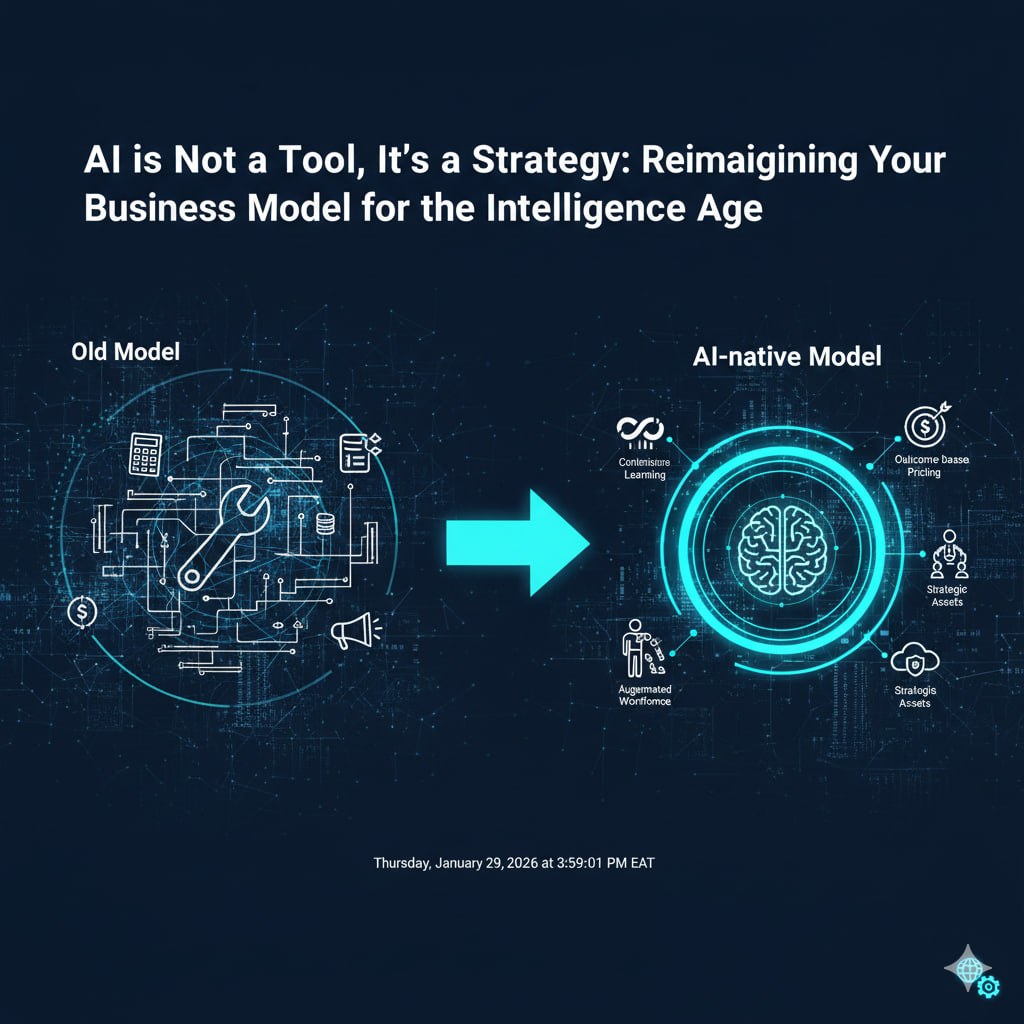
    1. From Product-Centric to “Intelligence-Centric” Offerings

    • Old Model: You sell a product (e.g., a software platform, physical device).
    • AI-Native Model: You sell intelligence embedded within or derived from your product. The product becomes a data capture and delivery mechanism for the core AI service.
    • Example: A fitness tracker is a product. An AI-powered personal health coach that continuously optimizes workouts, sleep, and nutrition based on biometric data, and evolves with you, is an intelligence-centric offering.

    2. Redefining Value Creation: Where is the “Moat”?

    • Old Model: Value derived from proprietary hardware, intellectual property, or traditional network effects.
    • AI-Native Model: Value is created through proprietary data + superior algorithms + continuous learning loops. Your competitive moat is your ability to accumulate unique data and train AI models that outperform competitors.
    • Example: A traditional bank sells financial products. An AI-native financial advisor uses vast, anonymized transaction data to predict market shifts, personalize investment advice at scale, and even anticipate customer needs before they arise, offering unparalleled value.

    3. New Revenue Models: From Subscriptions to “Outcome-Based” Pricing

    • Old Model: Selling licenses, subscriptions, or one-off products.
    • AI-Native Model: AI enables entirely new pricing structures. If your AI guarantees a specific outcome (e.g., “reduce energy consumption by 15%,” “increase sales conversions by 5%”), you can move to outcome-based pricing, taking a share of the value created.
    • Example: Instead of selling a marketing automation platform (subscription), an AI-driven growth agency charges a percentage of the additional revenue their AI generates for clients.

    4. The Augmented Workforce: Humans and AI as a Seamless Unit

    • Old Model: AI replaces human tasks.
    • AI-Native Model: AI augments human capabilities, allowing teams to operate at a superhuman level. It’s about synergy, not substitution.
    • Example: Instead of replacing customer service agents, AI agents handle routine inquiries and distill complex problems into actionable summaries, empowering human agents to focus on high-value, empathetic interactions.

    5. Strategic Data as Your Most Valuable Asset

    • Old Model: Data is a byproduct, often siloed and underutilized.
    • AI-Native Model: Data is a strategic asset, consciously collected, structured, and leveraged to fuel AI models. Data strategy becomes central to business strategy.
    • Example: A manufacturing company moves from collecting basic sensor data to implementing a comprehensive “digital twin” strategy, where AI continuously simulates and optimizes production, predicts failures, and designs new products based on real-time feedback loops.

    Building Your AI-Native Business Model: A Strategic Imperative

    To make this shift, businesses must:

    1. Conduct an AI Readiness Audit: Assess your current data infrastructure, talent, and existing AI capabilities.
    2. Identify “AI-First” Value Propositions: Where can AI fundamentally transform how you deliver value to customers, not just optimize existing processes?
    3. Invest in Data Strategy: Prioritize data collection, cleaning, and structuring. Your AI’s intelligence is only as good as your data.
    4. Foster an AI-Literate Culture: Train your workforce. Everyone, from sales to product development, needs to understand AI’s potential and limitations.
    5. Start Small, Think Big: Experiment with AI in core areas, learn quickly, and be prepared to iterate and scale transformational initiatives.

    The companies that succeed in the Intelligence Age will be those that view AI not as a feature to be added, but as the operating system for their entire enterprise. It’s time to stop tweaking your existing model and start building the AI-native business of tomorrow.

  • Data-Driven Growth: Using Small Business Analytics to Make Big Business Decisions

    Data-Driven Growth: Using Small Business Analytics to Make Big Business Decisions

    In 2026, the idea that “data is only for big corporations” is a relic of the past. Small businesses, solopreneurs, and startups now have access to powerful, user-friendly analytics tools that can transform gut feelings into actionable insights. This isn’t about drowning in spreadsheets; it’s about harnessing specific data points to make smart, strategic decisions that drive significant growth—the kind of decisions that typically propel “big businesses.”

    The truth is, even with limited resources, a data-driven approach can be your most significant competitive advantage, allowing you to optimize everything from marketing spend to customer retention.

    Why Data is No Longer Optional for Small Businesses

    1. Precision Targeting: In a crowded market, generic marketing campaigns waste precious resources. Data allows you to understand exactly who your ideal customer is and where to find them.
    2. Optimized Spending: Every dollar counts. Analytics help you identify what’s working (and what’s not) in your advertising, content, and sales efforts, ensuring a higher ROI.
    3. Proactive Problem Solving: Spot trends and potential issues before they escalate. Declining website traffic, rising customer churn, or a dip in conversion rates can be identified early.
    4. Personalized Customer Experiences: Understanding individual customer behavior allows you to tailor recommendations, communications, and offers, leading to increased loyalty and lifetime value.
    5. Strategic Foresight: Data isn’t just about looking backward. Predictive analytics, even at a basic level, can help you anticipate future demand, market shifts, and emerging opportunities.

    The Lean Analytics Stack: Essential Tools for Every Small Business

    You don’t need expensive enterprise software. A few core tools can provide immense value:

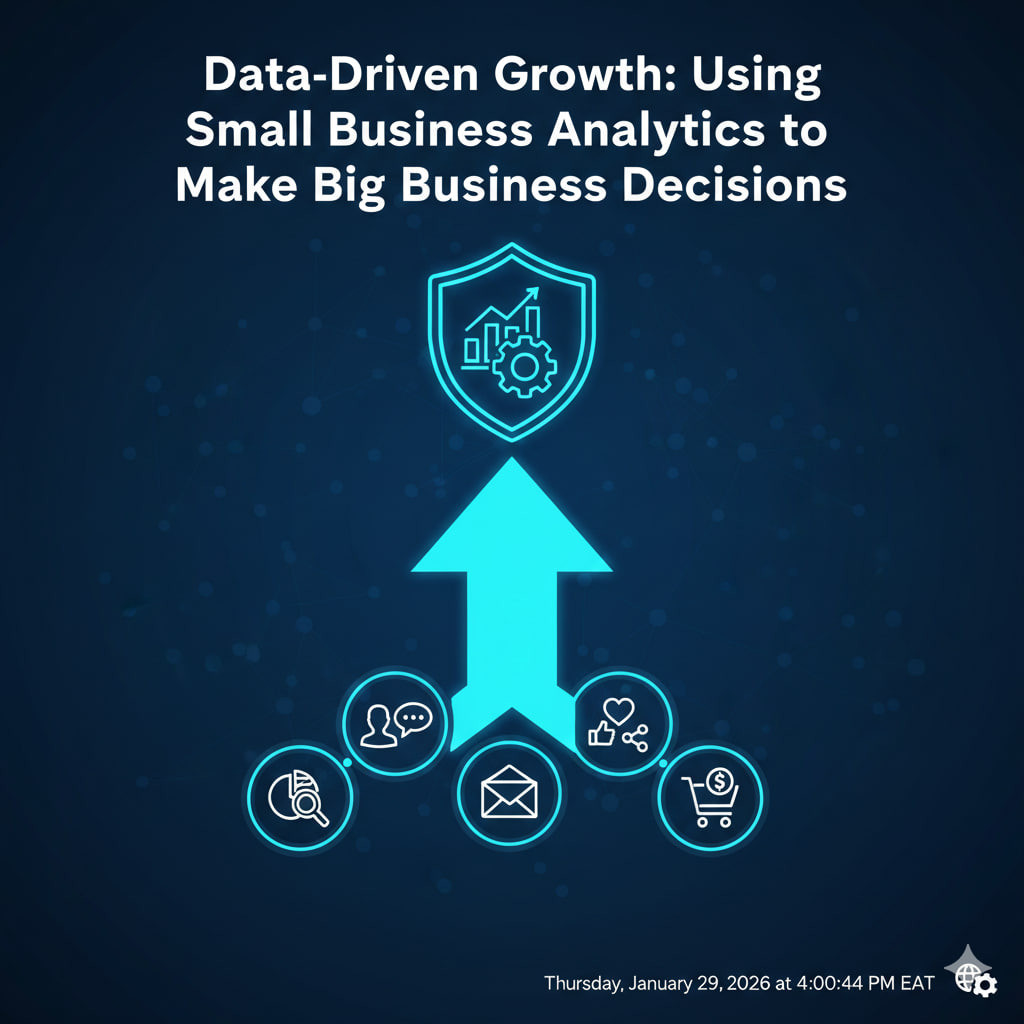
    1. Google Analytics 4 (GA4):
      • What it tracks: Website traffic, user behavior (where they come from, what they click, how long they stay, conversion events).
      • Why it’s critical: Your website is your digital storefront. GA4 reveals how customers interact with it, identifying popular content, conversion funnels, and areas of friction. It’s free and invaluable.
    2. CRM (Customer Relationship Management) Software (e.g., HubSpot CRM Free, Zoho CRM):
      • What it tracks: Customer interactions, sales pipeline, lead status, purchase history, communication logs.
      • Why it’s critical: Your customers are your lifeline. A CRM helps you understand your sales cycle, identify your most valuable customers, and personalize your outreach efforts.
    3. Social Media Analytics (Built-in to platforms like Facebook, Instagram, LinkedIn):
      • What it tracks: Post reach, engagement rates, follower demographics, best performing content types.
      • Why it’s critical: If social media is part of your marketing, these insights show you what content resonates with your audience and when they are most active.
    4. Email Marketing Analytics (e.g., MailerLite, Beehiiv, ConvertKit):
      • What it tracks: Open rates, click-through rates, conversion rates from emails, unsubscribe rates.
      • Why it’s critical: Your email list is a direct line to your audience. These metrics tell you how effective your communication is and help you refine your messaging.
    5. Payment Processing & E-commerce Platform Analytics (e.g., Shopify Analytics, Stripe Reports, Square Dashboard):
      • What it tracks: Sales volume, average order value, popular products, revenue trends, customer acquisition costs, churn rates.
      • Why it’s critical: Directly impacts your bottom line. These reports are essential for understanding product performance, pricing strategies, and overall financial health.

    Making Big Decisions from Small Data: Actionable Examples

    • Decision:Should I invest more in Facebook Ads or Google Search Ads?
      • Data Insight: Compare conversion rates and customer acquisition costs (CAC) from GA4 for each channel. If Facebook Ads have a higher CAC and lower conversion, shift budget to Google Search.
    • Decision:How can I reduce customer churn?
      • Data Insight: Use your CRM to identify common characteristics of churned customers (e.g., didn’t use a specific feature, received less personalized follow-up). Address those gaps with targeted outreach or product improvements.
    • Decision:What new product or service should I offer?
      • Data Insight: Analyze popular product views in GA4 vs. actual purchases. If a product is viewed often but rarely bought, there might be a pricing or information gap. Use social media analytics to spot trending conversations or pain points your audience expresses.
    • Decision:When is the best time to send my newsletter?
      • Data Insight: Email marketing analytics show the highest open and click-through rates based on send time. Optimize your schedule accordingly.

    Don’t let the term “analytics” intimidate you. Start with what’s readily available in your existing tools. By consistently monitoring key metrics and letting data guide your decisions, your small business can make big strategic moves,ensuring sustainable growth and long-term success in the competitive landscape of 2026.