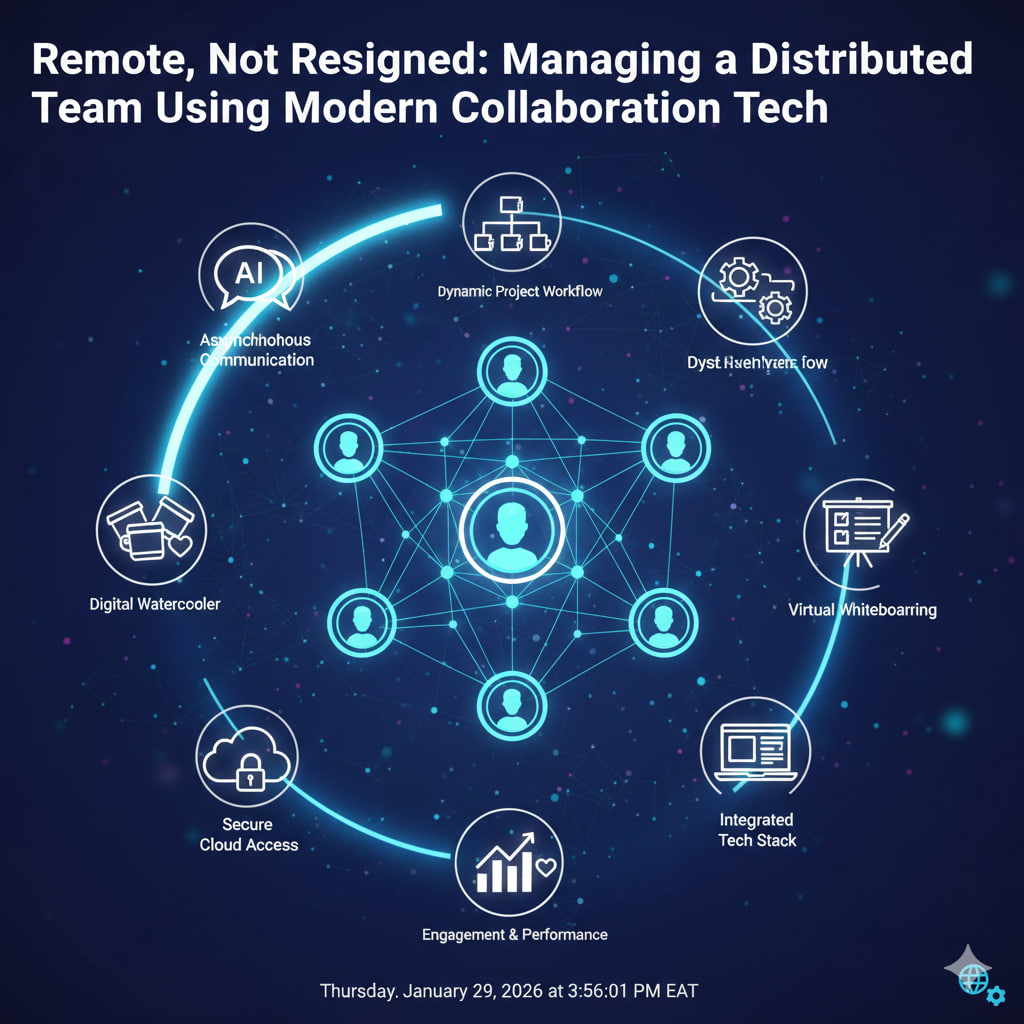
Here’s an article and thumbnail for “Remote, Not Resigned: Managing a Distributed Team Using Modern Collaboration Tech”:
Remote, Not Resigned: Managing a Distributed Team Using Modern Collaboration Tech
The great remote work experiment of the early 2020s has evolved into a permanent, strategic advantage for businesses in 2026. Companies that once struggled with distributed teams have now perfected the art of virtual collaboration, leveraging cutting-edge technology to maintain high productivity, foster strong company culture, and drive innovation, regardless of physical location.
The key lies in understanding that “remote” doesn’t mean “resigned” to isolation or inefficiency. Instead, it means empowering teams with the right tools and strategies to thrive autonomously while remaining deeply connected to shared goals.
The Evolution of Remote Work: Beyond Basic Video Calls
In 2026, managing a distributed team goes far beyond simple video conferencing. It involves a holistic approach to digital infrastructure, communication protocols, and a culture of trust and transparency.
1. The Asynchronous-First Communication Hub
Synchronous meetings (like video calls) are still necessary, but the default communication mode for high-performing remote teams is asynchronous.
- Modern Tech: Slack Huddles 2.0 (with AI summaries), Microsoft Teams Channels with AI context, Notion (for documentation and comments), and Loom (for quick video messages).
- Why it works: These tools allow team members across different time zones to contribute when it’s convenient for them, reducing “Zoom fatigue” and ensuring well-thought-out responses. AI-powered summaries help catch up quickly.
2. Dynamic Project & Workflow Orchestration
Traditional project management tools have evolved into dynamic workflow orchestrators that adapt to distributed teams’ needs.
- Modern Tech: ClickUp (for custom workflows), Asana (for task automation), and Monday.com (for visual project tracking).
- Why it works: These platforms offer robust automation (e.g., if a task is completed, then notify the next person in the workflow), personalized dashboards for each team member, and integrated communication features, ensuring everyone knows what needs to be done and by whom.
3. Virtual Whiteboarding & Brainstorming Environments
Recreating the spontaneity of an in-person brainstorming session is crucial for innovation.
- Modern Tech: Miro and Mural.
- Why it works: These tools provide infinite canvases where teams can collaboratively brainstorm with sticky notes, diagrams, images, and live cursors. They often integrate with video conferencing, allowing for dynamic, interactive remote workshops. AI features now assist in organizing ideas and identifying patterns.
4. The Digital Watercooler: Fostering Connection & Culture
Isolation is a significant risk for remote teams. Modern tech is dedicated to replicating informal interactions.
- Modern Tech: Donut (Slack/Teams integration) for random coffee chats, Gather.town for virtual office spaces, and private social channels within your communication hub.
- Why it works: These tools encourage spontaneous, non-work-related interactions, helping to build rapport, strengthen bonds, and combat feelings of loneliness that can arise in remote settings.
5. Performance Monitoring & Employee Engagement Platforms
Managing remote performance isn’t about micromanagement; it’s about transparency and support.
- Modern Tech: Glint (for real-time sentiment analysis), Culture Amp (for continuous feedback), and custom dashboards built in Notion or ClickUp for goal tracking.
- Why it works: These platforms provide insights into employee well-being, workload, and engagement levels, allowing managers to proactively address issues, recognize achievements, and ensure team members feel valued and supported.
6. Secure & Seamless Access: The Cloud-Native Infrastructure
The foundation of a successful distributed team is secure, reliable access to all necessary resources, regardless of location or device.
- Modern Tech: Google Workspace or Microsoft 365 (for cloud documents and email), LastPass Business (for shared password management), and Zero-Trust Network Access (ZTNA) solutions.
- Why it works: Ensures all team members can access critical files and applications securely, facilitating seamless collaboration and protecting sensitive data from cyber threats inherent in diverse work environments.
The evolution of technology has removed most of the traditional barriers to effective remote work. For leaders in 2026, the challenge isn’t if you can manage a distributed team, but how well you leverage these modern collaboration tools to build a connected, productive, and ultimately, a thriving workforce.
Leave a Reply