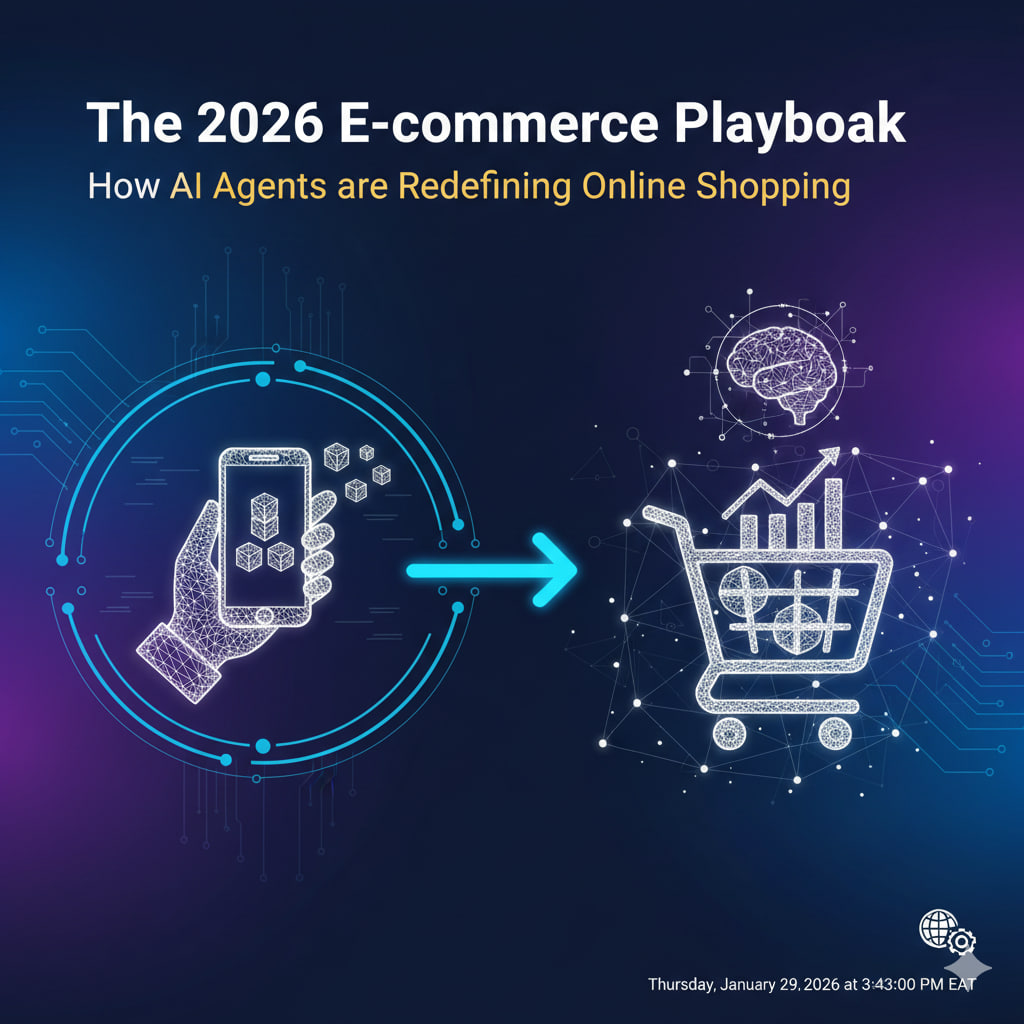
As we move through 2026, the digital storefront is undergoing its most radical transformation since the invention of the smartphone. We have officially entered the era of Agentic Commerce. No longer are AI tools mere “assistants” that suggest products; they have evolved into autonomous agents capable of researching, negotiating, and executing transactions on behalf of both consumers and retailers.
For businesses, the “Playbook” has changed. Survival in 2026 requires moving beyond traditional SEO and static web design toward an AI-first architecture. Here is how AI agents are rewriting the rules of the game.
1. From “Search” to “Action”: The Rise of Personal Shopper Agents
In 2025, shoppers asked AI for advice. In 2026, they delegate the task. Personal AI agents now browse the web to find the best deals, compare technical specifications, and even wait for price drops to hit a pre-set budget before automatically completing a purchase via Agentic Payment Protocols.
- The Shift: Traffic is moving away from traditional search engines toward “Answer Engines.”
- The Playbook: Retailers must optimize for AEO (Answer Engine Optimization), ensuring product data is structured so agents can “read” and trust it instantly.
2. Hyper-Personalization: The End of the Generic Storefront
The static homepage is dead. Today’s e-commerce sites are dynamic environments that reconfigure themselves in real-time. Using predictive intent, AI agents analyze local weather, recent social trends, and a user’s unique style to create a “Storefront of One.”
- Impact: Brands using agent-driven personalization have seen conversion rates climb by 15% and revenue increase by nearly 30% compared to traditional models.
3. Agent-to-Agent (A2A) Negotiation
One of the most disruptive trends of 2026 is the “negotiation loop.” A consumer’s AI agent can now “talk” to a merchant’s pricing agent to secure a loyalty discount or a bundled deal in milliseconds.
- The Tech: Universal protocols like MCP (Model Context Protocol) allow different AI systems to interact seamlessly, creating a frictionless marketplace where the best value—not the loudest ad—wins.
4. Visual and Immersive Discovery
AI agents have bridged the gap between “seeing” and “buying.” Through AI-enhanced Augmented Reality (AR), virtual stylists don’t just show you an outfit; they simulate how it fits your specific body type and recommend alterations.
- The Result: Return rates have plummeted as AI agents provide “fit confidence,” solving one of e-commerce’s oldest and costliest problems.
5. Autonomous Operations: The Back-End Revolution
Behind the scenes, the “Playbook” focuses on efficiency. Autonomous Merchandisers now manage inventory levels, automatically reordering stock and adjusting dynamic pricing based on real-time global supply chain data—all without human intervention.
- Efficiency: Multi-agent systems have reduced operational errors by up to 60%, allowing human teams to focus on brand strategy rather than data entry.
6. The “Human” Guardrail: Trust and Ethics
As AI agents take over the “logic” of shopping, humans are doubling down on “emotion.” 2026 has seen a surge in Ethical Consumption Advisors—AI agents that vet brands for sustainability, carbon footprint, and fair-trade practices.
- The Challenge: Brands that lack transparent data or “hallucinate” their credentials are being blacklisted by the very agents consumers trust to protect their values.
7. The New Loyalty: From Clicks to Context
Loyalty in 2026 is no longer about points; it’s about contextual relevance. Winning retailers are those whose data is “agent-ready”—clean, structured, and accessible. If an AI agent can’t find your shipping policy or real-time stock levels, your brand essentially doesn’t exist to the modern shopper.
Would you like me to generate a set of social media captions to help promote this 2026 E-commerce Playbook?
Leave a Reply